
-
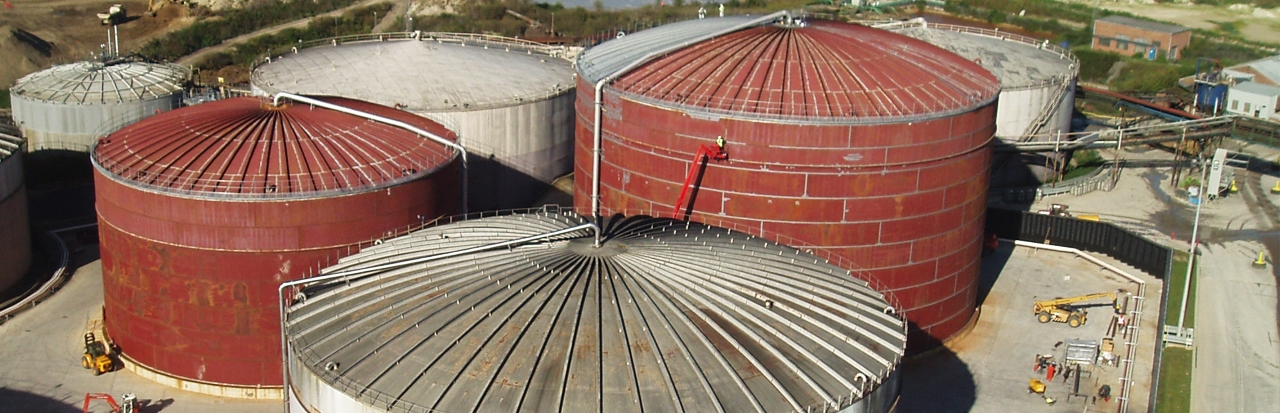
Site-constructed storage tanks - whatever the scale
One of the leading operators in this specialist field, Motherwell Bridge’s Storage Tank business has the benefit of over 100 years’ experience delivering a remarkable variety of specialist solutions across the globe.
-

Multi-skilled, quick response heat exchanger workforce
Specialists in shell and tube heat exchanger repair, Motherwell Bridge’s skilled employees can work in the harshest environment to provide you with what you need, when you need it.
-

Clayton Walker gasholder design and construction
Motherwell Bridge has been an acknowledged expert and market leader in the design and construction of gasholders and gas recovery systems for over 170 years.
Data Room vs Deal Management Software in the Canadian Oil & Gas Sector
Deals in the Canadian oil and gas sector are evolving rapidly. With production assets spanning Alberta’s oil sands, offshore projects in Newfoundland and Labrador, and pipelines crossing multiple provinces, transactions are increasingly complex. By 2026, deals are moving faster, data volumes are exploding, and regulatory compliance—driven by the Canadian Energy Regulator, provincial environmental authorities, and ESG reporting frameworks—is shaping timelines as much as valuations. Selecting the right digital stack to run a transaction can be the difference between a confident close and weeks of preventable delays.
For readers of IT&Tech Blog and industry professionals monitoring Canadian oil and gas technology, this topic is critical. Transactions now lean heavily on automation, auditability, and collaboration across multi-stakeholder teams, including operators, joint venture partners, government regulators, and investment firms. Yet many Canadian deal teams still face the common dilemma: when is a virtual data room (VDR) sufficient, and when is a full-fledged deal management platform necessary? Typical challenges include duplicated tools, fragmented communication, compliance gaps, and escalating costs during diligence peaks.
What Each Tool Actually Solves in Oil & Gas Transactions
Virtual Data Rooms (VDRs): Execution-Grade Diligence
A VDR is a secure digital workspace designed for document-intensive stages of a transaction. In Canadian oil and gas deals, VDRs are most often used for sell-side and buy-side diligence, asset divestitures, fundraising, regulatory submissions, and joint venture negotiations.
Key features and advantages include:
- Granular permissions and access controls to manage multiple bidders, regulators, or advisors.
- Watermarking, redaction, and device-level controls to protect proprietary technical data like seismic surveys, reservoir models, and production reports.
- Structured Q&A workflows to route questions efficiently across internal and external teams.
- Comprehensive audit trails to satisfy legal, compliance, and ESG reporting requirements.
- Integration with e-signature, identity providers, and document archiving tools, ensuring seamless workflow continuity.
Representative VDR providers widely used in the Canadian oil and gas sector include Datasite, Intralinks, Firmex, Ideals, ShareVault, and SecureDocs. A detailed providers overview will help to evaluate options to ensure platform capabilities align with Canadian regulatory and operational requirements.
Deal Management Platforms: Pipeline, Process, and Stakeholder Orchestration
Deal management software goes beyond document security to orchestrate the end-to-end lifecycle of oil and gas transactions. It is particularly useful in Canada where assets are geographically dispersed, regulatory processes differ by province, and joint ventures often involve multiple operators.
Key features include:
- Pipeline tracking and stage gate management to prioritize acquisitions, divestitures, or farm-in/farm-out opportunities.
- Stakeholder mapping and relationship management to keep corporate development, finance, legal, and technical teams aligned.
- Collaboration tools for workflow automation, task assignments, reminders, and approvals.
- Reporting dashboards and analytics to provide executives with real-time visibility into deal progress and risk exposure.
Canadian oil and gas teams often leverage platforms like DealCloud, Midaxo, Navatar, Salesforce with M&A add-ons, or Microsoft Dynamics 365 with custom deal workflows. Deal management software excels in managing multiple concurrent transactions, providing structure for internal communication, and capturing institutional knowledge across teams.
Where Each Tool Shines in a Canadian Oil & Gas Transaction
- Use a VDR when: sensitive documents such as seismic data, reserve reports, or environmental compliance records must be secured, distributed to multiple parties, and fully auditable.
- Use a deal management platform when: multiple deals are running concurrently, internal teams must coordinate workstreams, and executives need oversight of pipeline priorities, stage progress, and approvals.
- Use both together: most Canadian oil and gas deals follow a hybrid approach. Deals are tracked in a deal management platform, and for each active transaction, a dedicated VDR is spun up for secure diligence and signing.
Security and Compliance: 2026 Expectations in Canada
Security and compliance are non-negotiable. For VDRs, Canadian oil and gas teams should insist on:
- Strong identity controls (SSO, MFA, SCIM)
- Role-based access and granular permissions
- Watermarking, export governance, and device control
- Redaction tools to protect sensitive PII or proprietary technical data
For deal management platforms, look for SOC 2 Type II or ISO 27001 certification, encryption in transit and at rest, scoped permissions, and administrative audit capabilities. These measures are especially important given heightened regulatory scrutiny, including cybersecurity and ESG reporting requirements outlined by the Canadian Energy Regulator and recent provincial rules on data protection.
Data Residency and Cross-Border Workflows
Canadian oil and gas deals often involve international stakeholders. Data residency requirements must be carefully considered:
- VDRs typically offer region-specific hosting and secure storage options in Canada, ensuring compliance with provincial data laws.
- Deal management platforms may centralize metadata while storing documents in cloud environments; confirm where data resides and how backups and incident recovery are managed.
Q&A and Audit Trails
For sell-side transactions with multiple bidders, native Q&A flows, question routing, and approvals are crucial. Audit trails must capture timestamps, user actions, and document access logs. While deal management platforms can track communications and task completions, they rarely match the rigorous auditability of a VDR during diligence.
Pricing Models and Hidden Costs
Budgeting errors are common when Canadian deal teams misinterpret pricing structures:
- VDRs: Page- or data-based pricing can spike during peak diligence weeks. Predictive calculators and temporary uplifts are recommended. Enterprise licenses may provide cost certainty for large or frequent transactions.
- Deal management platforms: Pricing is often per seat or module, with additional costs for analytics, API calls, and sandbox environments. Integration work and admin time should be factored in.
- Additional costs: SSO/MFA, DLP features, export and archiving packages may incur extra fees.
Implementation Timelines and Change Management
- VDRs are fast to deploy, often within minutes to days, using pre-built folder structures, permission templates, and Q&A workflows.
- Deal management platforms require process mapping, role definitions, and integration alignment with CRM, email, and BI tools. Formal onboarding cycles with champions across corporate development, legal, and finance teams are essential to avoid missteps.
Workflow Design: Marrying Both Tools Without Chaos
- Run deal origination and prioritization in the deal platform with stage gates and IC memo fields.
- At LOI or confirmatory diligence, create a VDR with pre-built folder trees and structured Q&A.
- Map metadata across platforms to avoid manual entry; use light automation where possible.
- Feed VDR reports into deal dashboards for executive visibility.
- Archive VDR artifacts in a compliant repository and retain structured notes in the deal platform for post-close learnings.
AI in 2026: Practical Applications in Canadian Oil & Gas
Expect AI to support:
- VDRs: automated classification, PII detection, clause extraction, and redaction recommendations.
- Deal platforms: lead scoring, relationship insights, auto-brief generation, and meeting note summaries.
Human oversight is critical—AI should be used as an assistant, not a decision-maker. All outputs should be logged for auditability, and proprietary documents should never train external AI models without contractual safeguards.
Market Signals Shaping Tool Selection
Deal teams prioritize speed, compliance, and hybrid collaboration. According to PwC’s 2024 Canadian Oil & Gas M&A Trends Report and data from Canadian Energy Regulator filings, technology adoption in diligence and deal orchestration is increasingly a differentiator for execution quality and value capture.
Must-Have Features for Canadian Oil & Gas Deal Teams
VDR Must-Haves
- Granular folder permissions and dynamic watermarking
- Redaction tools and automated PII detection
- Structured Q&A with approval workflows
- Audit logs and compliance reporting
- Region-specific hosting and retention policies
Deal Management Must-Haves
- Configurable pipelines and stage gates
- Relationship mapping with email/calendar sync
- Role-based dashboards and IC memo templates
- Field-level governance and change tracking
- AI summarization and scoring with model transparency
Common Pitfalls to Avoid
- Using generic cloud folders for diligence (weak auditability, risk of data sprawl)
- Managing pipelines in spreadsheets (brittle and error-prone)
- Skipping identity integrations (SSO/MFA reduces errors and admin load)
- Underestimating training (role-based onboarding prevents Q&A and permission mistakes)
- Ignoring post-close archiving (plan exports and retention early)
How to Decide Quickly: A Practical Rubric
- Define your transaction profile: volumes, geographies, asset types, and mix of buy-side vs sell-side.
- Map outcomes to tool categories: diligence rigor favors VDR; multi-deal orchestration favors deal management platforms.
- Shortlist 2–3 vendors per category using a providers overview.
- Run a two-week pilot with scripted demos and measurable success metrics.
- Lock the security review: certifications, identity management, logging, export, and incident response.
- Negotiate pricing levers: page/data ceilings for VDRs; seat/module tiers for deal platforms.
Real-World Stack Examples in Canada
- Corporate Acquirer, National Footprint: Deal management in DealCloud or Salesforce; VDR in Datasite or Intralinks; e-signature integrated; BI dashboards in Tableau or Power BI.
- Private Equity, High Deal Volume: CRM-based sourcing; automated triage; per-deal VDRs; structured post-close handoff to portfolio operations.
- Energy Venture Capital, Fast Cycles: Lightweight pipeline in deal software; VDR spun up only for late-stage rounds or secondary asset acquisitions requiring multi-party diligence.
Governance, Documentation, and Board Readiness
Boards expect robust record-keeping for decisions with cybersecurity, privacy, and environmental compliance implications. Consolidate decision trails: the deal platform captures IC notes and approvals, while the VDR logs document access and Q&A transcripts. Together, they create a closing file resilient to audits and leadership changes.
2026 Outlook: Convergence With Caution
Some deal platforms now offer embedded document repositories, while some VDRs add light pipeline features. Convergence may reduce tool sprawl, but depth matters. A VDR’s simplified pipeline does not replace CRM-grade intelligence; a deal platform’s document module rarely matches specialist VDR security. Pilot before committing to “all-in-one” claims.
Final Recommendations
For Canadian oil and gas teams, the pragmatic approach is selecting the right tool for the job and integrating where needed. VDRs address secure sharing, watermarking, Q&A, and audit logging. Deal management platforms provide pipeline visibility, relationship tracking, and executive reporting. Regardless of choice, insist on export clarity, identity controls, and realistic onboarding plans.
Before your first sales call, frame the evaluation with a one-page hypothesis: which tool category solves the core problem, how it fits your current stack, and what success looks like in 90 days. Then request a sandbox and proof-of-concept data set. A structured demo script will surface gaps much faster than open-ended tours.
Use a provider’s reviews to normalize claims across data room vendors: map features to use cases, request documentary evidence for security certifications, and validate export/archival processes that satisfy legal. Ask for explicit answers on data residency and breach notification obligations.
Worldwide experience
Projects in... Europe, Middle East, Far East, Africa, Canada, North America, South America, Australasia.